
No More Silos: Open-Protocol Integration for Infrastructure That Talks
Every closed system is a future migration you haven't scheduled yet. The way out of vendor lock-in isn't one mega-tool, it's open protocols and a unified model: SNMP, Modbus, BACnet, MQTT, REST and webhooks, normalized into one source of truth. Here's how to stop paying the integration tax.
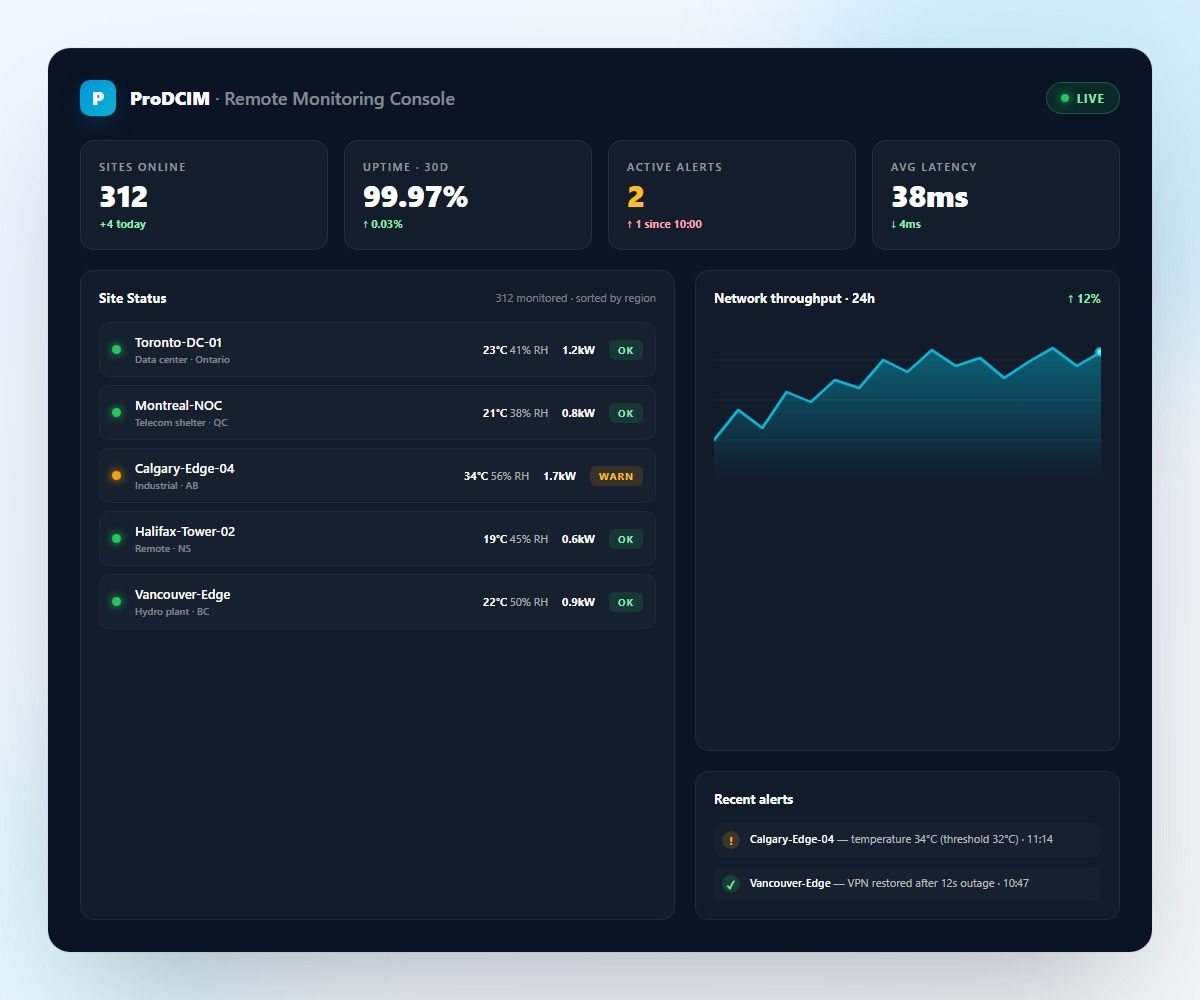
Walk any real facility and you'll find a museum of vendors: switches that speak SNMP, PDUs and meters on Modbus, building systems on BACnet, newer sensors publishing MQTT, and a handful of boxes with nothing but a proprietary cloud. Each one arrived with its own portal. Together they form the thing every operations team quietly fights: the silo.
The way out isn't buying one mega-tool that promises to do everything. It's open protocols plus a unified model, meeting your gear where it already is, and normalizing it into a single source of truth.
The integration tax
Closed systems feel fine at purchase and expensive forever after. You pay the tax in pieces:
- Swivel-chair operations, staff hopping between portals to assemble one picture.
- Data you can't correlate, the PDU's view and the switch's view never meet.
- Lock-in, every closed system is a migration you haven't scheduled yet.
- Automation you can't build, if the data won't leave the box, neither will your workflows.
The fix is to treat protocol support as a first-class requirement, not an afterthought.
The protocol landscape, briefly
You don't need to love these protocols. You need a platform that speaks them so you don't have to:
| Protocol | Typically speaks for | Notes |
|---|---|---|
| SNMP | Network gear, servers, UPS | The lingua franca of IT monitoring |
| Modbus | PDUs, power meters, industrial sensors | Workhorse of power and OT |
| BACnet | HVAC, building management | Bridges facilities and IT |
| MQTT | Modern IoT sensors, edge | Lightweight pub/sub for the edge |
| REST / webhooks | Apps, automation, CRMs | How your platform talks to everything else |
Real estates are mixed. The platform's job is to ingest all of them and make them look like one system.
Why open beats proprietary
A proprietary integration is a favor the vendor does you, until a contract, an acquisition, or a deprecation ends it. An open protocol is a standard you own the right to use. Open support means:
- Choice. Buy the best sensor for the job, not the one that happens to match your dashboard.
- Longevity. Standards outlive product lines.
- Leverage. Your data is portable, so your vendor has to keep earning it.
A good question for any platform demo: "If we replaced you next year, could we take our data and integrations with us?" The honest answer tells you whether you're buying a tool or being held hostage.
Normalizing into one model
Speaking the protocols is only half the work. The value comes from normalization, mapping a Modbus register, an SNMP OID, and an MQTT topic onto the same concepts: this device, this rack, this reading, this threshold. Once everything lives in one model, a temperature is a temperature whether it came from a BACnet sensor or an MQTT one, and you can alarm, trend, and report across the whole estate uniformly.
That unified model is also what makes AI-assisted analysis possible, anomaly detection and forecasting need consistent data, not forty dialects.
Webhooks and APIs: the outbound half
Integration runs both ways. Inbound protocols pull your infrastructure in; a clean REST API and webhooks push events out, into your ticketing, your CRM, your automation, your chat. This is how monitoring stops being a destination you visit and becomes a participant in your workflows: an alarm opens a ticket, a recovery closes it, a new asset syncs to the CMDB automatically.
A practical integration plan
- 1Inventory the dialects. List what each class of gear speaks today, you'll likely find four or five protocols, not twenty.
- 2Map to one model. Normalize devices, points, and thresholds into a single schema; resolve duplicate "truths" now.
- 3Onboard by protocol, not by vendor. Bring in all the SNMP gear, then all the Modbus, and so on, it's faster than one box at a time.
- 4Wire the outbound side. Connect webhooks/REST to ticketing and automation so events drive action.
- 5Set RBAC and SSO. One model deserves one access policy.
Infrastructure will always be heterogeneous, that's healthy. The mistake is letting heterogeneity become fragmentation. Open protocols and a unified model let your mixed estate behave like one system, without surrendering your freedom to choose what's in it.
Want to see your existing gear in one model? [Book a walkthrough](/request-demo/) and we'll map your protocols.
See it on your own racks
Book a walkthrough mapped to your environment: monitoring, asset management and out-of-band resilience across every site.
More insights
The Data Centre Operations Job Changed in 2026. Here Is What Actually Moved.
Denser racks, fewer qualified hands, costlier outages and a verdict on AI: what the 2026 shift in data centre operations looks like from the floor, and why another dashboard will not fix it.
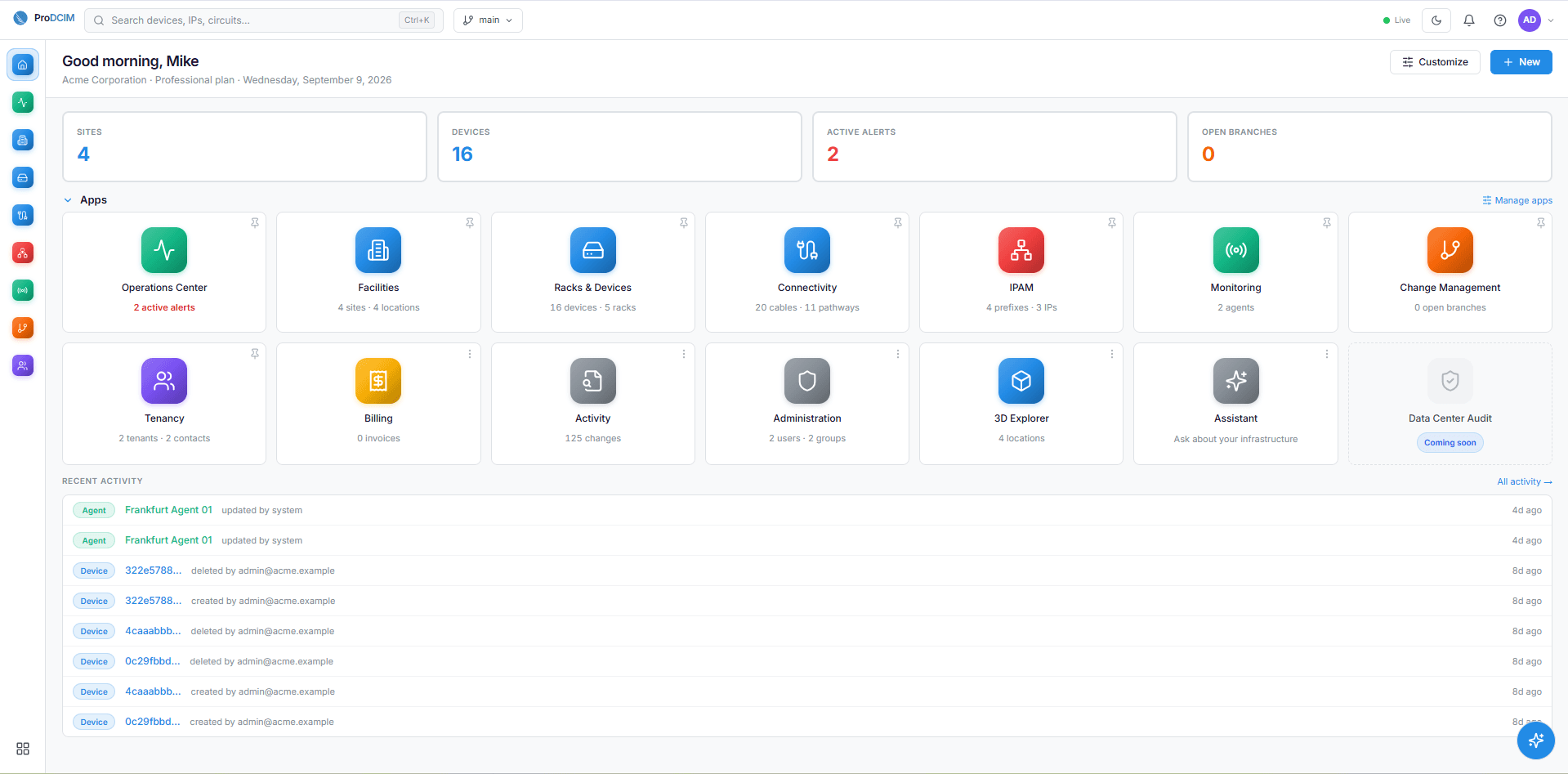
Why does it take so long to find the equipment behind an alert?
A PDU circuit crossing 80 percent names a circuit, not a device. When the floor plan, the asset register and the power readings live in separate systems, closing that gap is the slowest part of the shift. Here is what changes when they share one model of your infrastructure.
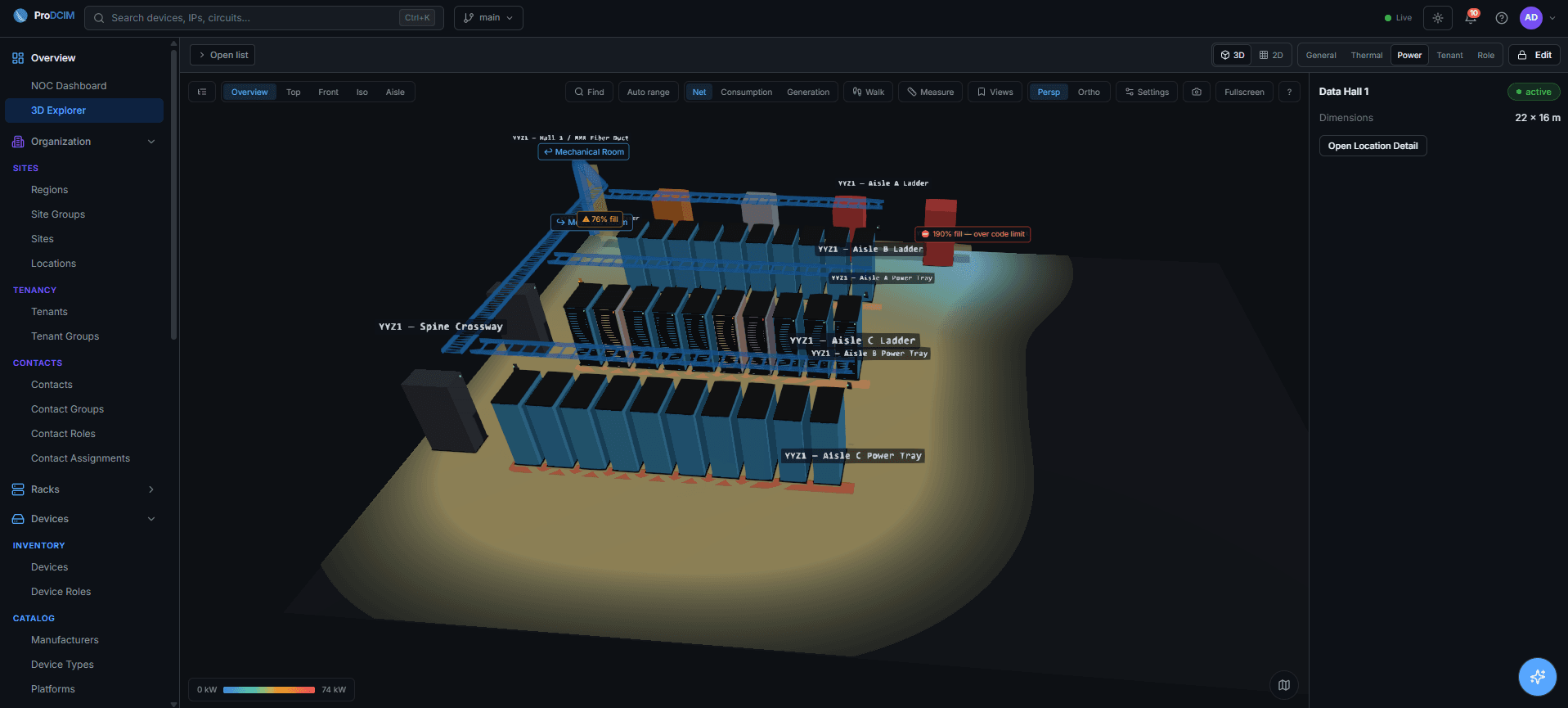
Racks Are Getting Denser. Confidence in the Data Is Not.
Uptime Institute's 2026 survey shows racks at 50 kW or more rose from 10 to 13 percent in a year, while racks under 10 kW fell from 32 to 25 percent. Over the same period operators reported the least confidence in the completeness of their operational data, which is the property that decides whether you can act on it.